

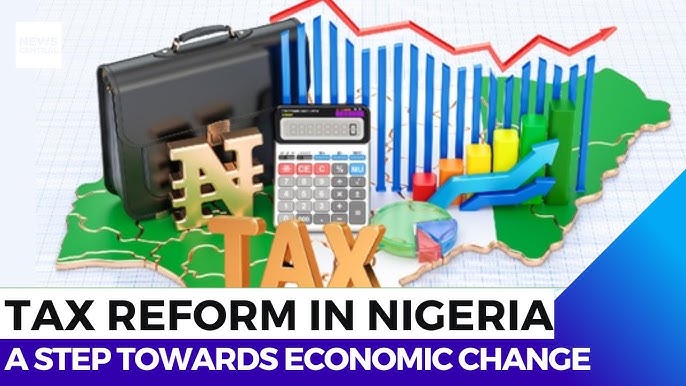
Tax Reform in Nigeria 2026: If you’re a Nigerian taxpayer or business owner, chances are you’ve heard whispers about the “new tax laws” coming into effect this year. Some people are panicking, others are confused, and a few are cautiously optimistic.
But what’s the real story? What exactly changed, and more importantly, how does it affect you?
Let’s cut through the noise and talk about what’s genuinely different about Nigeria’s tax system in 2026.
The Big Picture: Nigeria’s Tax System Just Got a Makeover
On June 26, 2025, President Bola Tinubu signed four major tax bills into law, marking the most comprehensive overhaul of Nigeria’s tax system since 1999. These aren’t minor tweaks or adjustments. We’re talking about a complete redesign of how taxation works in the country.
The four new laws are:
- Nigeria Tax Act (NTA) 2025
- Nigeria Tax Administration Act (NTAA) 2025
- Nigeria Revenue Service Act 2025
- Joint Revenue Board Act 2025
Together, these laws took over 60 scattered taxes and condensed them into fewer than 10 clear categories. Think of it like cleaning out a cluttered wardrobe and organizing everything into neat, labeled boxes.
The goal? Make tax compliance simpler, fairer, and less of a headache for everyday Nigerians.
Everything officially kicked in on January 1, 2026, which means we’re living in the new tax era right now.
Tax Reform: What’s Different for Regular Employees and Workers?
Here’s where it gets interesting, especially if you’re earning a salary or running a small hustle on the side.
The ₦800,000 Tax-Free Threshold
Perhaps the most talked-about change is this: if you earn ₦800,000 or less per year, you pay absolutely zero personal income tax. Nothing. Nada.
For context, that’s about ₦66,667 per month. Government estimates suggest this exempts roughly 98% of Nigerian workers from paying any income tax at all. If you’re a junior staff member, a freelancer just getting started, or someone juggling multiple small gigs, this is a massive relief.
New Progressive Tax Rates
For those earning above the threshold, the government introduced a new progressive system. Instead of the old flat rates, your income is now taxed in layers:
- ₦800,001 to ₦3 million: 15%
- ₦3 million to ₦10 million: 18%
- ₦10 million to ₦50 million: 21%
- Above ₦50 million: 25%
The keyword here is “progressive.” You’re not taxed at one flat percentage on your entire income. Each portion of your earnings gets taxed at different rates as you move up the ladder. Middle-income earners, especially, will notice they’re paying less than before.
Goodbye to Consolidated Relief Allowance
The old Consolidated Relief Allowance (CRA) system has been scrapped entirely. In its place, there’s a new rent relief provision that lets you claim 20% of your annual rent, up to a maximum of ₦500,000. For many people, this might actually result in lower relief than what they previously enjoyed under CRA, so keep that in mind when calculating your take-home pay.
Everything Counts as Income Now
Here’s where things get stricter. The new law has widened the definition of taxable income significantly. Gratuity, bonuses, digital asset gains, prizes, honoraria, grants, and even income from “non-traditional sources” are all now taxable under the modernized Pay-As-You-Earn (PAYE) system.
If you’re a content creator earning from YouTube, an influencer getting brand deals, or someone trading cryptocurrency, the tax authorities now consider all of that as income that should be declared and taxed. The informal economy isn’t so informal anymore.
What’s Changing for Businesses and Companies?
Business owners, this section is for you.
Small Business Exemptions Just Got Better
The definition of a “small company” has been updated. Under the new rules, if your company has:
- Annual turnover of ₦50 million or less, AND
- Total fixed assets below ₦250 million
…then you’re exempt from Companies Income Tax (CIT) entirely. Professional service providers (lawyers, accountants, consultants, etc.) are specifically excluded from this classification, though.
But wait, there’s more. There’s also a separate “small business” classification under the Tax Administration Act. If your business earns ₦100 million or less annually with fixed assets under ₦250 million, you’re exempt from three major taxes: Corporate Income Tax, Value Added Tax (VAT), and Withholding Tax.
The government claims this will exempt about 97% of small businesses from these tax burdens, freeing up cash for growth and reinvestment.
Corporate Tax Rates Are Dropping
For companies that don’t qualify as “small,” there’s still good news. The standard corporate income tax rate is being reduced from 30% to 25% as of the 2026 assessment year. That’s a 5-percentage-point drop that will make a real difference to bottom lines.
Say Hello to the Development Levy
The government has replaced multiple scattered levies (Tertiary Education Tax, NASENI levy, Police Trust Fund, IT levy) with a single Development Levy set at 4% of your company’s assessable profits.
While this might sound like just another tax, it actually simplifies things. Instead of tracking and paying four or five different levies throughout the year, you now have one consolidated charge. Small companies are exempt from this levy entirely.
Capital Gains Tax Just Got Serious
This one’s significant for investors and companies dealing in assets. The Capital Gains Tax rate for companies has jumped from 10% to a whopping 30%. That’s a 200% increase.
Additionally, the new law now taxes indirect transfers of shares. If you sell shares in an offshore holding company that owns a Nigerian business, CGT will apply in Nigeria (subject to treaty exemptions).
The only silver lining is that the exemption threshold has increased to ₦150 million with gains not exceeding ₦10 million in any 12 months.
Minimum Tax Has Been Abolished
Here’s a win for struggling businesses: the old minimum tax requirement is gone. Previously, even if your company made zero profit, you still had to pay a minimum tax. That’s no longer the case, which should ease pressure on businesses going through tough times.
Digital Enforcement: Big Brother Is Watching (Your Bank Account)
Perhaps the most game-changing aspect of these reforms is the shift to digital-first enforcement.
Tax ID Is Now Mandatory
Your Tax Identification Number (TIN) is no longer optional. It’s now required for financial transactions, and your NIN (National Identification Number) serves as your Tax ID. This creates a unified system that makes it nearly impossible to fly under the radar.
If you’re running any kind of business, formal or informal, you need to register and link your Tax ID to your corporate bank accounts. This includes fintech businesses, bill payment platforms, and any enterprise that processes electronic transactions.
The Nigeria Revenue Service Is Born
The old Federal Inland Revenue Service (FIRS) has been transformed into the Nigeria Revenue Service (NRS), equipped with enhanced powers and AI-driven tools. They can now cross-reference data across bank accounts, payroll systems, and business filings to detect underreporting.
The days of cash-based, off-the-books transactions are numbered. If money hits your bank account, the assumption is that the tax authorities can see it.
E-Invoicing and Automated VAT Collection
Businesses are now required to implement the government’s fiscalisation system for VAT collection. This means real-time electronic invoicing that automatically reports to the tax authorities.
Nigeria is actually one of the early adopters of mandatory e-invoicing in Africa. While this increases transparency and reduces tax evasion, it also means businesses need to invest in proper accounting systems and digital infrastructure.
VAT Changes: What You Need to Know
VAT has gotten a makeover too, with changes that affect both businesses and consumers.
Zero-Rated Items Expanded
The list of goods and services subject to 0% VAT has been significantly expanded to include essential items like:
- Basic food items
- Medical and pharmaceutical products (excluding cosmetic and fitness items)
- Educational books and materials
- Tuition for nursery, primary, secondary, and tertiary education
- Medical equipment
- Electricity generation and transmission services
This is meant to reduce the cost burden on everyday necessities. Businesses supplying these items can still recover the VAT they paid on inputs, which should theoretically keep prices lower.
Input VAT Recovery Just Got Easier
One of the more business-friendly changes is the expansion of recoverable input VAT. Companies can now claim back VAT paid on services and fixed assets, not just raw materials.
If you’ve been paying VAT on office equipment, vehicles, or professional services, you can now offset that against your output VAT.
The catch? You need proper documentation and must claim within the required timeframe.
VAT Revenue Distribution Gets Controversial
The way VAT revenue is distributed among federal and state governments has changed, with 60% of allocations now based on derivation (where goods are actually consumed). This has sparked political debates, especially among states that produce goods versus those that consume them.
For businesses, this means you’ll need to submit detailed sales schedules showing state-by-state breakdowns when filing VAT returns.
Tax Reliefs and Incentives: The Carrots Amid the Sticks
It’s not all about collecting more revenue. The new laws include several incentives:
Agricultural Sector Tax Holiday
New companies in the agricultural sector get a five-year tax holiday to encourage food security and agricultural investment. If you’ve been thinking about agribusiness, this is your window.
Pioneer Status Still Exists
Companies in designated industries can still apply for pioneer status, which offers tax relief during the initial years of operation.
Enhanced Expense Deductions
The test for deductible business expenses has been simplified. Previously, expenses had to be “wholly, exclusively, necessarily, and reasonably” incurred. Now, they just need to be “wholly and exclusively” incurred in producing income. That’s two fewer hurdles to clear.
Allowable deductions now include rent, salaries, utilities, marketing costs, transport, professional fees, pension contributions, NHIS and NHF contributions, life insurance premiums, mortgage interest, and capital allowances for business assets.
The Tax Ombud: A New Ally for Taxpayers
One genuinely positive development is the creation of the Office of the Tax Ombudsman. This independent body serves as an arbiter for taxpayer complaints and disputes.
If you feel you’re being unfairly treated, harassed, or wrongly assessed by the tax authorities, you now have an official channel to seek redress without immediately going to court.
What This Means in Practice
So, what’s the bottom line?
For low and middle-income earners: You’re likely paying less tax than before, or possibly nothing at all. The ₦800,000 exemption is genuine relief.
For small businesses: You’ve got significant exemptions, but you absolutely must formalize, register, and maintain proper records. Operating informally is no longer viable.
For large businesses and high earners: You’re now under much closer scrutiny. The combination of digital tracking, stricter penalties, and AI-powered auditing means compliance is non-negotiable.
For everyone: The era of “manage” and informal arrangements is ending. Tax ID registration, proper documentation, and digital compliance are your new reality.
The Penalties Are Real
Speaking of compliance, penalties for non-compliance have been significantly increased. We’re talking millions of naira in fines for businesses that fail to register, don’t maintain proper records, or underreport income.
The message from the government is clear: either you comply voluntarily, or you’ll be forced to comply expensively.
Preparing for the New Normal
If you haven’t already, here’s what you should do immediately:
- Register for a Tax ID if you don’t have one
- Link your Tax ID to all business bank accounts
- Review your business classification to see if you qualify for exemptions
- Update your accounting systems to handle digital compliance requirements
- Keep detailed records of all income and expenses
- Separate business and personal finances if you’re currently mixing them
- Seek professional advice if your situation is complex
The January 1, 2026, deadline has passed. We’re already in the new system. The smartest move now is to understand the rules and position yourself for compliance, not try to avoid or delay the inevitable.
Final Thoughts: Reform or Revenue Grab?
There’s legitimate debate about whether these reforms are genuinely about simplification and fairness or primarily about increasing government revenue. The truth is probably somewhere in between.
The exemptions for low earners and small businesses are real and substantial. The consolidation of taxes does reduce complexity. The digital infrastructure should, in theory, reduce corruption and manual harassment of taxpayers.
But the expanded definition of taxable income, the jump in capital gains tax, and the intense digital surveillance also represent a significant tightening of the tax net. The government is clearly serious about capturing revenue from previously untaxed or undertaxed sectors, especially the digital economy.
Whether this “pro-people” framing holds up will depend on implementation. Will the promised relief actually reach those who need it? Will digital systems work efficiently without creating new bottlenecks? Will enforcement be fair or arbitrary?
Time will tell. But one thing is certain: the tax landscape in Nigeria has fundamentally changed, and understanding these changes isn’t optional anymore; it’s essential for financial survival and success.
What’s your biggest concern or question about the new tax reforms? Have you already felt the impact on your business or paycheck? The conversation is just beginning.
SUGGESTED POST >> Tax Identification Number Nigeria: Get It Online Instantly
Discover more from SteezeTech
Subscribe to get the latest posts sent to your email.
