


Nigerian Army Ranks and Symbols and Salary: Complete 2026 Guide
The Nigerian Army remains one of the most respected institutions in the country. If you’re considering a military career or just curious about how the system works, understanding the rank structure is essential.
Many Nigerians don’t actually know the difference between a Lieutenant and a Captain. The symbols on uniforms can look confusing to civilians.
This guide breaks down everything you need to know about Nigerian Army ranks, their corresponding symbols, and what soldiers actually earn.
Understanding the Nigerian Army Structure
The Nigerian Army operates on a hierarchical system borrowed from the British military tradition. Each rank comes with specific responsibilities, symbols, and salary packages.
The structure is divided into three main categories.
Commissioned Officers – These are the leaders who have received formal training and hold command positions.
Non-Commissioned Officers (NCOs) – The backbone of the army who bridge the gap between officers and enlisted soldiers.
Enlisted Personnel – Entry-level soldiers who form the bulk of military operations.
Let’s break down each category in detail.
Enlisted Personnel Ranks
These are the foundation of the Nigerian Army. Every soldier starts here, regardless of educational background.
1. Recruit
This is where everyone begins. When you join the Nigerian Army, you’re a recruit undergoing basic training.
Symbol: No rank insignia during training
Salary Range: ₦49,000 – ₦55,000 monthly
Recruits spend several months in the depot learning military basics. Physical fitness, weapon handling, and discipline form the core of this phase. It’s tough, demanding, and not everyone makes it through.
The salary at this level is modest, but you get free accommodation, food, and medical care.
2. Private (Pte)
After completing basic training, you become a Private. This is the official entry rank.
Symbol: No stripe or insignia on uniform
Salary Range: ₦55,000 – ₦65,000 monthly
Privates carry out routine duties and follow orders from superiors. They’re assigned to various units depending on aptitude and army needs. Some go to infantry, others to signals, engineering, or other corps.
Many Privates use this time to gain experience and prepare for promotion exams.
3. Lance Corporal (L/Cpl)
The first promotion comes with added responsibility.
Symbol: One chevron (inverted V) on the sleeve
Salary Range: ₦68,000 – ₦78,000 monthly
Lance Corporals often supervise small teams of Privates. They’re expected to demonstrate leadership qualities and technical competence. This rank shows you’re serious about your military career.
The additional allowances start to make a difference at this level.
4. Corporal (Cpl)
A Corporal commands more respect and handles more complex duties.
Symbol: Two chevrons on the sleeve
Salary Range: ₦82,000 – ₦95,000 monthly
Corporals may lead small squads during operations. They train junior soldiers and ensure discipline within their units. This rank requires passing written exams and demonstrating consistent performance.
Some Corporals specialize in technical areas like communications or mechanics.
5. Sergeant (Sgt)
Now we’re entering senior enlisted territory.
Symbol: Three chevrons on the sleeve
Salary Range: ₦105,000 – ₦125,000 monthly
Sergeants are experienced soldiers who’ve proven themselves over years of service. They supervise larger groups and play crucial roles in training programs. Their technical knowledge is usually extensive.
A good Sergeant can make or break a unit’s effectiveness.
6. Staff Sergeant (S/Sgt)
This rank brings significant authority among enlisted personnel.
Symbol: Three chevrons with a crown above
Salary Range: ₦130,000 – ₦150,000 monthly
Staff Sergeants handle administrative and operational responsibilities. They’re often in charge of specific sections within a company. Their experience makes them invaluable during deployments.
The pay increase reflects their expanded duties.
7. Warrant Officer (WO)
The highest enlisted rank before commissioned officer status.
Symbol: Nigerian coat of arms on sleeve
Salary Range: ₦155,000 – ₦180,000 monthly
Warrant Officers are technical experts and senior advisors. They bridge the gap between enlisted soldiers and officers. Many have spent 15-20 years in service by this point.
Their knowledge of military procedures is encyclopedic.
Non-Commissioned Officer Ranks
While technically part of enlisted ranks, senior NCOs deserve special mention for their pivotal roles.
Master Warrant Officer (MWO)
Symbol: Nigerian coat of arms with laurel wreath
Salary Range: ₦185,000 – ₦210,000 monthly
MWOs handle complex administrative and technical functions. They’re the go-to experts for specialized equipment and procedures. Officers rely heavily on their counsel.
This rank represents decades of dedicated service.
Regimental Sergeant Major (RSM)
The most senior enlisted position in a battalion.
Symbol: Nigerian coat of arms with laurel wreath and crown
Salary Range: ₦220,000 – ₦250,000 monthly
RSMs maintain discipline and morale across entire battalions. They’re feared and respected in equal measure. The Commanding Officer depends on them to keep the unit functioning smoothly.
Only the most exceptional soldiers reach this level.
Commissioned Officer Ranks
These ranks require higher education and officer training. Most officers join through the Nigerian Defence Academy or the direct short service commission.
Second Lieutenant (2Lt)
The first officer rank.
Symbol: One star (pip) on shoulder board
Salary Range: ₦180,000 – ₦220,000 monthly (plus allowances)
Fresh officers from NDA or direct commission start here. They’re learning to lead platoons under the guidance of senior officers. The transition from cadet to officer is challenging.
Second Lieutenants typically command 30-40 soldiers.
Lieutenant (Lt)
With some experience under their belt.
Symbol: Two stars on the shoulder board
Salary Range: ₦230,000 – ₦280,000 monthly
Lieutenants have proven themselves capable of independent command. They may serve as platoon commanders or staff officers. Their decision-making authority increases significantly.
The salary bump reflects growing responsibilities.
Captain (Capt)
A senior platoon or junior company commander.
Symbol: Three stars on shoulder board
Salary Range: ₦300,000 – ₦380,000 monthly
Captains are experienced officers who’ve likely seen deployment. They command respect from both subordinates and peers. Many specialize in specific military occupations by this rank.
This is where officer careers really take shape.
Major (Maj)
The first field officer rank.
Symbol: Nigerian coat of arms on the shoulder board
Salary Range: ₦420,000 – ₦520,000 monthly
Majors typically serve as company commanders or senior staff officers. They oversee 100-200 soldiers, depending on unit type. Strategic thinking becomes as important as tactical skills.
The financial compensation starts to become quite comfortable.
Lieutenant Colonel (Lt Col)
A senior field officer.
Symbol: Nigerian coat of arms with one star
Salary Range: ₦580,000 – ₦720,000 monthly
Lieutenant Colonels command battalions or serve in key staff positions. They’re responsible for 500-800 soldiers. Their decisions impact entire operational areas.
This rank requires both military expertise and administrative acumen.
Colonel (Col)
High-level command and staff positions.
Symbol: Nigerian coat of arms with two stars
Salary Range: ₦820,000 – ₦1,000,000 monthly
Colonels lead brigades or serve as senior staff officers at the division level. They shape military policy and operational strategy. Political awareness becomes increasingly important.
The salary reflects their senior position in the hierarchy.
General Officer Ranks
These are the top echelons of Nigerian Army leadership.
Brigadier General (Brig Gen)
The first general officer rank.
Symbol: Nigerian coat of arms with three stars and an eagle
Salary Range: ₦1,200,000 – ₦1,500,000 monthly
Brigadier Generals command brigades of 3,000-5,000 soldiers or serve in critical headquarters roles. They influence national security decisions. Appointments at this level are highly competitive.
Only exceptional officers make it this far.
Major General (Maj Gen)
Senior general officer.
Symbol: Nigerian coat of arms with Nigerian eagle and crossed sword and baton
Salary Range: ₦1,800,000 – ₦2,200,000 monthly
Major Generals command divisions or serve as General Officers Commanding (GOC). They oversee tens of thousands of soldiers. Their strategic vision shapes military operations across regions.
This rank comes with significant prestige and responsibility.
Lieutenant General (Lt Gen)
One of the highest ranks.
Symbol: Nigerian coat of arms with crossed sword and baton, Nigerian eagle, and laurel wreath
Salary Range: ₦2,500,000 – ₦3,000,000 monthly
Lieutenant Generals serve as Corps Commanders or in top Army Headquarters positions. They’re part of the military’s senior leadership council. Policy formulation and national defense planning fall under their purview.
Few officers reach this distinguished level.
General (Gen)
The highest rank in the Nigerian Army.
Symbol: Nigerian coat of arms with elaborate insignia, including a crossed sword and baton with the Nigerian eagle
Salary Range: ₦3,500,000+ monthly
Only the Chief of Army Staff holds this rank. It’s the pinnacle of military achievement. The General reports directly to the President and Chief of Defence Staff.
This position carries immense responsibility for national security.
Understanding Rank Symbols and Insignias
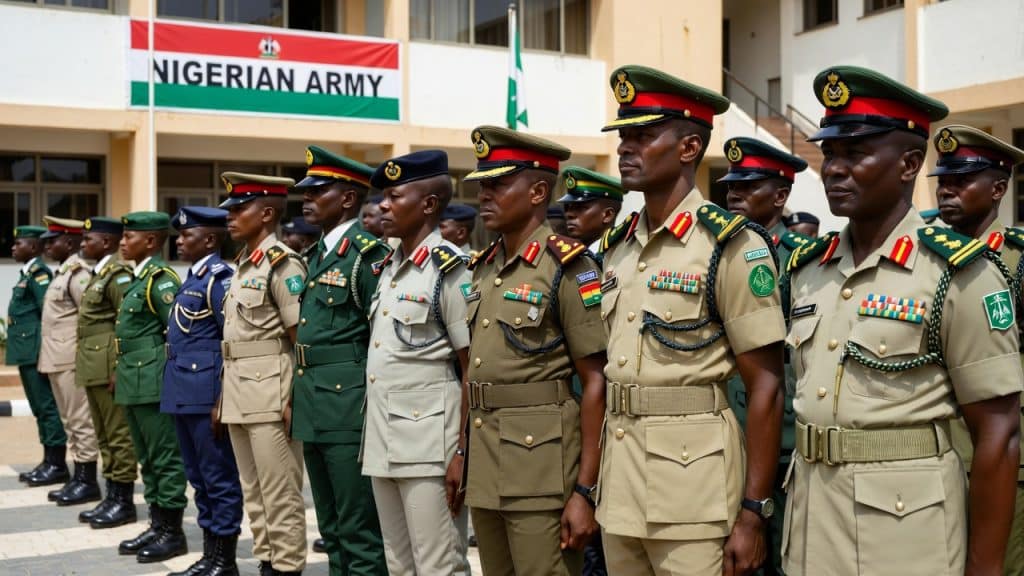
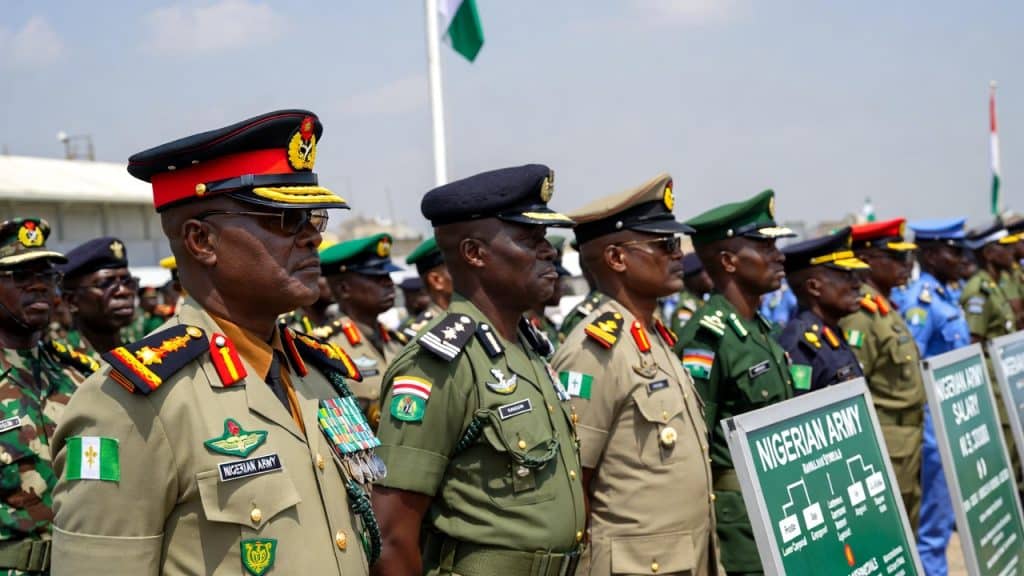
Nigerian Army rank symbols follow a logical progression. Stars (pips) distinguish junior officers. The Nigerian coat of arms appears on the field officer ranks.
Chevrons mark enlisted ranks from Lance Corporal to Staff Sergeant.
The number and arrangement of these symbols tell you exactly where someone stands in the hierarchy. Learning to read them takes some practice but becomes second nature.
Shoulder boards (epaulettes) display officer ranks clearly. Enlisted personnel wear their insignias on sleeves.
During field operations, ranks may be subdued or hidden for tactical reasons. This prevents enemies from identifying leaders.
Salary Structure Breakdown
The figures mentioned are base salaries. Actual take-home pay includes numerous allowances.
Common Allowances:
- Housing allowance
- Transport allowance
- Ration allowance
- Operational allowance (during deployments)
- Hazard allowance
- Medical allowance
- Leave allowance
- Uniform allowance
These allowances can add 40-70% to base salary, depending on rank and posting.
For example, a Captain with a base salary of ₦320,000 might take home ₦480,000-₦550,000 after allowances.
Deployed soldiers receive additional compensation. Peacekeeping missions abroad come with UN allowances that significantly boost earnings.
The Nigerian government periodically reviews military salaries. The last major increase was implemented in 2024.
Factors Affecting Salary Progression
Time in service matters tremendously. Two Majors with the same rank might earn differently based on years served.
Specialization also plays a role. Pilots, doctors, engineers, and other technical specialists receive additional allowances.
Postings affect earnings, too. Certain locations come with hardship allowances. Soldiers in conflict zones like the Northeast receive hazard pay.
Educational qualifications can open doors to faster promotion. Officers with advanced degrees often progress more quickly.
Performance evaluations directly impact promotion prospects. Consistently high ratings accelerate career advancement.
Promotion Criteria
Promotions aren’t automatic. They require meeting specific conditions.
Key Requirements:
- Minimum time in current rank
- Passing promotion exams
- Positive performance reports
- Available vacancies at the next rank
- No disciplinary issues
- Required training courses completed
Competition intensifies at higher ranks. The pyramid narrows considerably above Major.
Politics and connections do play a role, though the military tries to maintain meritocracy. Outstanding performance remains the surest path upward.
Some officers plateau at certain ranks and serve out their careers there. Not everyone becomes a General.
Benefits Beyond Salary
Military service offers advantages beyond monthly pay.
Additional Benefits:
- Free or subsidized housing
- Comprehensive medical coverage for the soldier and family
- Educational support for children
- Pension after retirement
- Access to military facilities
- Priority in certain government programs
- Networking opportunities
These benefits have real monetary value. Free housing alone can save ₦200,000-₦500,000 monthly, depending on location.
The pension system ensures financial security after retirement. Veterans receive monthly stipends for life.
Career Paths in the Nigerian Army
Different paths suit different people. Combat arms (infantry, armor, artillery) offer traditional military careers.
Support services (signals, engineering, supply) provide technical specialization.
Medical and legal corps allow professionals to serve while practicing their fields.
Intelligence and military police offer unique career trajectories.
Special forces units like the Army Rangers represent elite paths requiring exceptional physical and mental capabilities.
Some officers transition to the defense industry or private security after military service. The skills and discipline transfer well.
Comparing Military to Civilian Salaries
How do military salaries stack up against civilian jobs in Nigeria?
A Second Lieutenant (₦180,000-₦220,000 base) earns comparably to fresh graduates in banking or oil and gas. But the military offers better job security and benefits.
By Captain rank, military compensation becomes quite competitive. The total package often exceeds what mid-level managers earn in the private sector.
At senior ranks, Generals earn significantly more than most civilian executives. The job security is unmatched.
However, the demands are also extreme. Long deployments, danger, and rigid discipline aren’t for everyone.
Recent Changes and Reforms
The Nigerian Army has undertaken significant modernization efforts. Salary structures were reviewed in 2024 to improve retention.
Welfare programs expanded to address soldier grievances. Housing, medical care, and equipment procurement received increased funding.
Training standards were upgraded to meet contemporary security challenges. The Boko Haram insurgency and banditry exposed capability gaps.
Technology integration is ongoing. Modern communication systems, surveillance equipment, and armored vehicles are being acquired.
These reforms aim to build a more professional, capable, and motivated force.
Challenges Facing Nigerian Army Personnel
Despite improvements, challenges remain. Equipment shortages still plague some units.
Delayed allowances and benefits frustrate soldiers. Bureaucratic inefficiency affects payment timelines.
Accommodation at some barracks remains substandard. Families sometimes live in inadequate conditions.
The security threats are evolving. Soldiers face well-armed insurgents and bandits with sophisticated weapons.
Mental health support is inadequate. PTSD and combat stress aren’t properly addressed.
Corruption occasionally affects promotions and postings. Meritocracy isn’t always maintained.
These issues require continued attention from military leadership.
How to Join the Nigerian Army
Recruitment happens annually through advertised application processes. Requirements vary by entry method.
Common Entry Routes:
Nigerian Defence Academy (NDA) – For degree holders seeking commission, ages 17-22. This is the most prestigious path.
Direct Short Service Commission – For graduates with specific qualifications, ages 22-30. Faster route to officership.
Regular Combatant Recruitment – For enlisted ranks, minimum SSCE, ages 18-26. The most accessible entry point.
Direct Regular Commission – For professionals like doctors and lawyers.
The application process includes online registration, screening, physical fitness tests, medical examinations, and interviews.
Competition is fierce. Only a small percentage of applicants succeed.
Physical preparation is crucial. Many fail the fitness requirements.
Future of Nigerian Army Ranks and Compensation
The trend points toward better compensation. The government recognizes the need to retain quality personnel.
Regional security challenges demand a capable military. Investment in personnel welfare will likely continue.
Technology may reshape some rank structures. Cyber warfare and drone operations create new specializations.
International partnerships could influence Nigerian military development. Training with advanced militaries raises standards.
The younger generation expects better working conditions. The Army must adapt to attract top talent.
Salary transparency is improving. Clear career progression paths help with recruitment.
Conclusion
Understanding Nigerian Army ranks, symbols, and salaries provides insight into military service as a career. The hierarchy from Recruit to General reflects increasing responsibility and compensation.
The symbols on uniforms tell stories of dedication and achievement. Each star or chevron represents years of service and sacrifice.
Salaries have improved significantly, though challenges remain. The total compensation package, including benefits and allowances, makes military service financially viable.
For those considering enlistment, research thoroughly. Speak with current and former soldiers. Understand both the rewards and demands.
The Nigerian Army offers opportunities for service, leadership, and personal growth. It’s not for everyone, but for the right person, it’s a fulfilling career.
The rank structure ensures order and efficiency. Understanding it helps civilians appreciate what soldiers do.
Frequently Asked Questions (FAQs)
Q1: What is the lowest rank in the Nigerian Army?
A: The lowest rank is Recruit during basic training, followed by Private after completing training. Recruits earn approximately ₦49,000-₦55,000 monthly, while Privates earn ₦55,000-₦65,000.
Q2: How long does it take to become a General in the Nigerian Army?
A: It typically takes 30-35 years minimum to reach General rank. You must progress through all lower ranks, demonstrate exceptional leadership, and have available positions. Only a handful of officers reach this level.
Q3: Can I join the Nigerian Army without WAEC results?
A: No. The minimum educational requirement is a Senior Secondary Certificate (SSCE) with credits in relevant subjects, including Mathematics and English. An officer’s entry requires a university degree.
Q4: What is the salary of a Nigerian Army Captain?
A: A Captain earns between ₦300,000 and ₦380,000 monthly as base salary. With allowances (housing, transport, ration, operational), total compensation can reach ₦480,000-₦600,000 depending on posting and specialization.
Q5: What do the stars on the Nigerian Army uniform mean?
A: Stars (pips) on shoulder boards indicate officer ranks. One star = Second Lieutenant, two stars = Lieutenant, three stars = Captain. Field officers display the Nigerian coat of arms instead, with additional stars for generals.
Q6: How often are Nigerian soldiers promoted?
A: Promotion timelines vary by rank. Enlisted personnel typically wait 2-4 years between promotions at junior levels. Officers might wait 3-5 years between ranks. Senior promotions take longer and depend on vacancies.
Q7: Do Nigerian soldiers pay tax on their salaries?
A: Military personnel are subject to Pay-As-You-Earn (PAYE) tax like other federal government employees. However, certain allowances, especially operational and hazard allowances, may be tax-exempt.
Q8: What’s the difference between the Nigerian Army and the Nigerian Defence Academy?
A: The Nigerian Defence Academy (NDA) is the training institution where officer cadets receive education and military training before commissioning as Second Lieutenants. The Nigerian Army is the actual military organization where they serve after graduation.
Q9: Can women join the Nigerian Army at any rank?
A: Yes. Women can join through all standard entry routes – NDA, Short Service Commission, and regular combatant recruitment. They follow the same rank structure and salary scale as their male counterparts, though some combat roles have restrictions.
Q10: What happens to the Nigerian Army’s salary during deployment?
A: Soldiers receive additional operational allowance during deployments, especially to conflict zones. UN peacekeeping missions come with substantial international allowances (often USD-denominated) that can triple regular monthly income. Deployment benefits vary by mission type and location.
RELATED POST >> Mechatronics Engineering Salary in Nigeria – Shocking Truth
Discover more from SteezeTech
Subscribe to get the latest posts sent to your email.
